Soft flooring versus hard flooring after a flood
Carpet and pad
- Pad acts like a sponge and is almost always discarded after outside water.
- Carpet backing traps silt; most carpet goes too after contaminated water.
- Tack strip around the edges is usually replaced.
- Removal exposes the slab so it can be cleaned and dried.
Tile, vinyl plank and laminate
- Ceramic and porcelain tile set in mortar often survive with thorough cleaning.
- Floating vinyl plank traps water underneath and is often lifted to dry the slab.
- Laminate with a fiberboard core swells and is generally replaced.
- Grout lines may need cleaning or regrouting after silt contact.
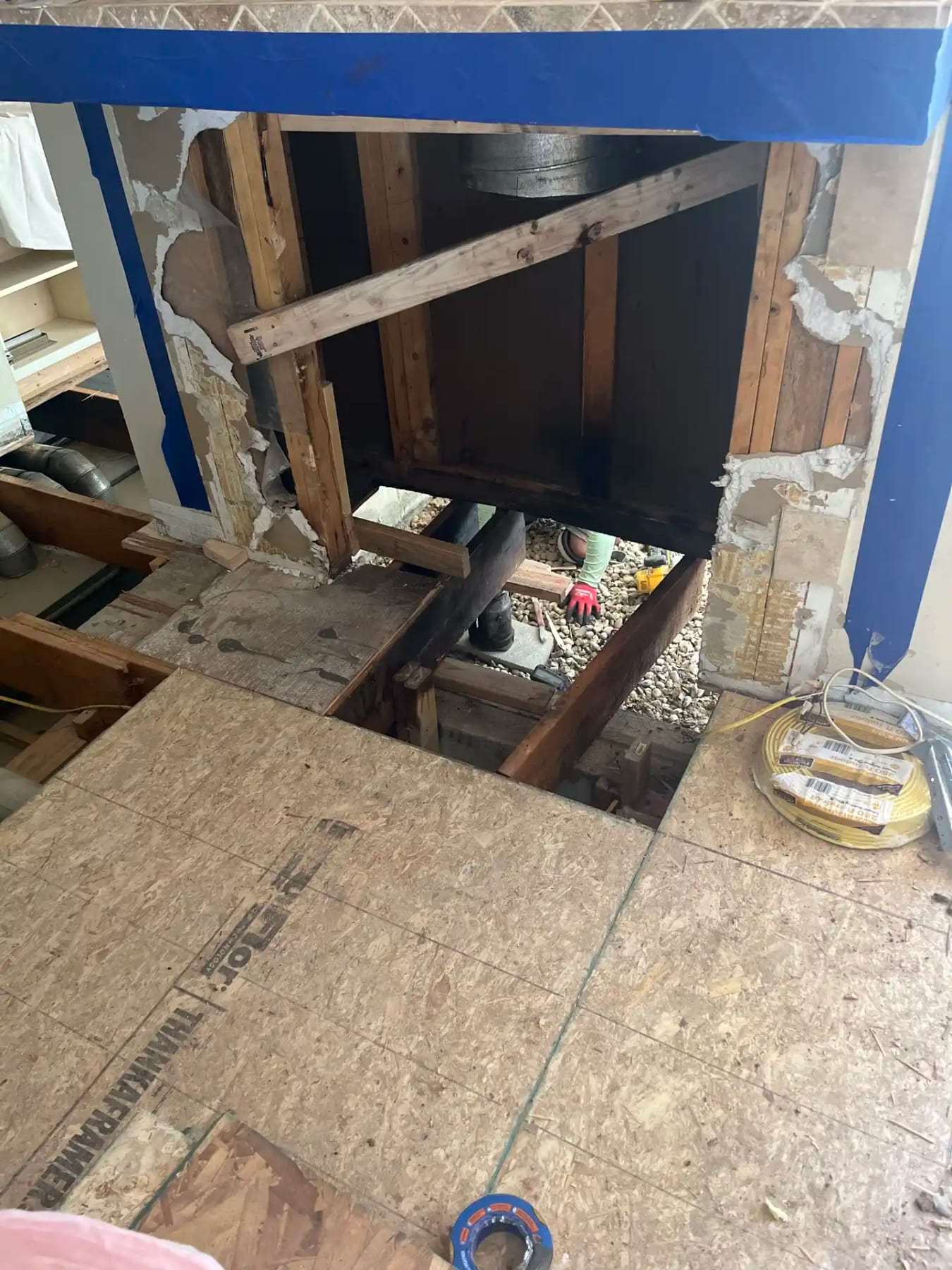
Opening cut in a subfloor with plywood sheets and framing exposed. Shown to illustrate the work described; not a job for this site or at any address named here.
The slab under the floor
Most basement and walkout floors in the area are concrete slabs. Concrete is durable, but it is porous. After floodwater sits on it, the slab absorbs moisture and some of the contamination. Once flooring comes up, the slab should be scraped of silt, scrubbed with a detergent, rinsed, disinfected and then dried. Drying a slab can take noticeably longer than drying walls, because water migrates out slowly from below the surface.
Installing new flooring on a slab that is still damp is a common mistake. Moisture coming out of the concrete can cause adhesive failure, cupping, odors or growth under the new floor. Flooring installers often test slab moisture before installing; ask whether that test will happen and what reading the product's manufacturer requires.
A few homes have wood-framed floors over a crawlspace or a lower level. In those cases water may have reached subfloor sheathing and floor joists. Oriented strand board subfloors can swell and lose strength, and the crawlspace below may hold standing water that needs pumping and drying of its own.
Removing wet carpet safely
Wear protection
Gloves, boots and eye protection. Carpet soaked with floodwater is heavy and dirty.
Cut into strips
A utility knife and strips about a few feet wide make carpet manageable to roll and carry.
Bag the pad
Pad tears easily and drips; bag it immediately to keep contamination off clean floors.
Pull tack strip carefully
Tack strip nails are sharp and rusty after flooding. A pry bar and heavy gloves help.
Keep samples
Save a small labeled square of carpet and pad for the insurance adjuster before hauling the rest away.
General information for Castle Rock, not a quote or professional advice. In an emergency, call 911.